Choosing between LiFePO4 and lithium-ion batteries is not a simple contest between “safer” and “more powerful.” The comparison is not perfectly tidy: LiFePO4 is itself a lithium-ion chemistry, while shoppers often use “lithium-ion” to mean nickel-based options such as NMC or NCA. So, what is the difference between lifepo4 and li-ion batteries? In practical terms, it often comes down to energy density, lifespan, cost, and operating conditions. LiFePO4 commonly offers strong thermal stability and many charge cycles. NMC and NCA packs typically store more energy in less space. That matters when fitting a battery beneath an electric vehicle’s floor—or carrying one into a compact camper.
Battery scientist Dr. Jeff Dahn’s research underscores that chemistry must be judged in the context of its application. A fair paraphrase of that engineering lesson is: “Choose chemistry for the duty cycle, not the label.” That distinction helps make the comparison useful. A home solar setup may value years of daily cycling, while a lightweight vehicle may prioritize range and compact packaging. Check the specific product’s cycle-life conditions, usable capacity, battery-management system, and charging-temperature limits; chemistry alone cannot guarantee performance. Cold mornings matter. So does heat. I would not treat a headline lifespan as a promise: real results depend on depth of discharge, storage, and charging habits. The right choice is the one that fits the load, space, budget, and routine you actually have.
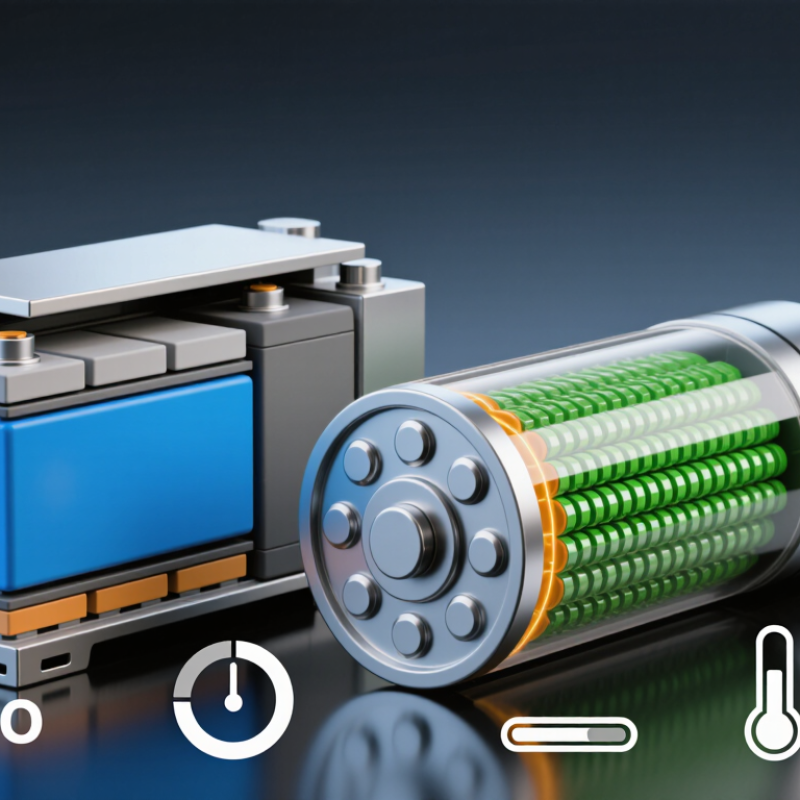
LiFePO4, or lithium iron phosphate, is one type of lithium-ion battery. The name describes its cathode, which uses lithium, iron, and phosphate. Many other lithium-ion batteries use nickel-based cathode materials, such as nickel manganese cobalt blends. Both types move lithium ions between electrodes as they charge and discharge. Small detail, big difference.
Inside a typical cell, the anode often contains graphite, while an electrolyte carries ions between the electrodes. A battery management system monitors conditions such as voltage and temperature. It helps keep the pack operating within its specified limits. In practical terms, a LiFePO4 battery is often chosen for its long cycle life and relatively stable thermal behavior. Other lithium-ion chemistries can store more energy in a given weight or volume, which can matter in compact devices. Neither chemistry wins every comparison.
Performance depends on more than the chemistry label. Cell design, charging limits, temperature, and pack quality all affect results. For example, cold conditions can reduce charging performance, and poor system design can undermine an otherwise suitable battery. I would check the manufacturer’s specifications for the actual product, not assume every LiFePO4 or lithium-ion pack behaves alike. A label is only part of the story.
| Comparison | LiFePO4 (LFP) | Nickel-Rich Lithium-Ion (Typically NMC or NCA) |
|---|---|---|
| What it is | A lithium-ion battery chemistry that uses lithium iron phosphate as its cathode material. | A lithium-ion battery chemistry that typically uses nickel-based cathode materials, such as nickel manganese cobalt (NMC) or nickel cobalt aluminum (NCA). |
| Nominal cell voltage | About 3.2 V per cell. | About 3.6–3.7 V per cell; exact values depend on chemistry and design. |
| Typical cell-level energy density | Roughly 90–160 Wh/kg. | Roughly 150–250 Wh/kg. |
| Cycle life | Often around 2,000–5,000 cycles to approximately 80% remaining capacity in suitable products and operating conditions. | Often around 1,000–2,000 cycles to approximately 80% remaining capacity, though some designs achieve more. |
| Thermal stability | Generally higher thermal stability and lower risk of thermal runaway than nickel-rich chemistries; safe operation still depends on cell quality, battery management, and correct use. | Generally lower thermal stability than LFP, so thermal management and protective controls are especially important. |
| Weight and size for the same energy | Typically heavier and bulkier because its energy density is lower. | Typically lighter and more compact for the same stored energy. |
| Common applications | Stationary energy storage, backup power, and electric vehicles where long cycle life and thermal stability are priorities. | Electric vehicles and portable equipment where high energy density and lower weight are priorities. |
| Cold-weather charging | Charging below 0°C (32°F) is generally restricted unless the battery has suitable heating or charging controls. Check the product’s specified temperature limits. | Charging below 0°C (32°F) can also cause damage; permitted limits vary by cell and battery system. |
| Relative cost | Often less expensive per unit of capacity, but actual prices vary with market conditions, product design, and system requirements. | May cost more per unit of capacity; pricing varies by chemistry, manufacturing scale, and market conditions. |
| Best suited for | Applications prioritizing durability, frequent cycling, and thermal stability, where additional weight and volume are acceptable. | Applications prioritizing maximum range or energy in a limited space and weight allowance. |
| Overall trade-off | Usually favors cycle life and thermal stability over compactness and energy per kilogram. | Usually favors energy density and compactness over cycle life and thermal stability. |
Note: LiFePO4 is itself a type of lithium-ion battery. The figures above are broad, indicative ranges rather than guarantees; actual performance depends on cell design, operating temperature, charge and discharge rates, depth of discharge, and battery management.
It is a type of lithium-ion battery. Its cathode uses lithium, iron, and phosphate. Small detail, big difference.
The main difference is the cathode chemistry. Some other types use nickel-based materials and can store more energy in less space. Neither option wins every comparison.
They can suit home energy storage, camper vans, and off-grid cabins. A cabin battery might run lights and a refrigerator overnight. That matters.
Some nickel-based lithium-ion batteries offer more energy in a smaller, lighter package. That can help with phones and laptops. Not always.
It often offers a long cycle life, but results depend on cell quality, temperature, and charging habits. I might be oversimplifying if I focus only on chemistry.
Yes. Cold conditions can reduce charging performance. Check the battery’s temperature limits, especially for an outdoor installation or cold garage.
Compare usable capacity, weight, operating temperature, charging requirements, and cycle-life test conditions. Also check that the charger and protection system are compatible. Specs can look reassuring, but real conditions are messier.
This article compares LiFePO4 and other lithium-ion batteries, explaining how their chemistries and cell designs influence everyday use. It explores what is the difference between lifepo4 and li-ion batteries, including distinctions in thermal stability, energy density, power delivery, and expected cycle life. Rather than treating one type as universally better, the comparison shows how each design balances safety, performance, size, and longevity.
The article also considers which battery type may suit different applications, from systems where long service life and stability are priorities to situations where compact size and higher energy density matter more. Cost, charging habits, and maintenance are included to help readers weigh the full ownership experience, not just the initial purchase price. By comparing these practical factors, readers can make a more informed choice based on their needs and intended use.

 Vires Energy