2026 Top Solar Systems Why Is My Circuit Breaker Tripping?

Time:2026-09-17 Author:Charlotte
0%

A solar system can look perfectly normal while its circuit breaker trips without warning. Then the inverter shuts down, the monitoring app reports an error, and the home suddenly loses confidence in its power supply. The real question is, “why is my solar power system tripping the circuit breaker?” This 2026 guide examines that problem through practical troubleshooting, equipment knowledge, and safety-focused advice.

A tripping breaker does not automatically mean the inverter has failed. Overloaded circuits, short circuits, damaged cables, moisture, loose terminals, and battery faults can all play a role. In some cases, the breaker itself may be worn or incorrectly matched to the system. Experienced solar technicians usually inspect the inverter display, breaker temperature, wiring condition, and recent weather history. A hot plastic smell or darkened terminal deserves immediate attention. Do not keep resetting the breaker.

Small details matter. Did the trip happen during strong sunlight? Did it occur after heavy rain? Did a new appliance start running at the same time? These clues can narrow the fault, although they cannot replace testing. This article will explain common causes, safe checks, and warning signs that require a qualified electrician or solar installer. There is no universal fix. That assumption is easy to make, but often wrong. Reliable answers come from manufacturer data, measured electrical readings, and careful inspection. Keep a simple record of each trip. It may reveal a pattern that a quick reset hides.
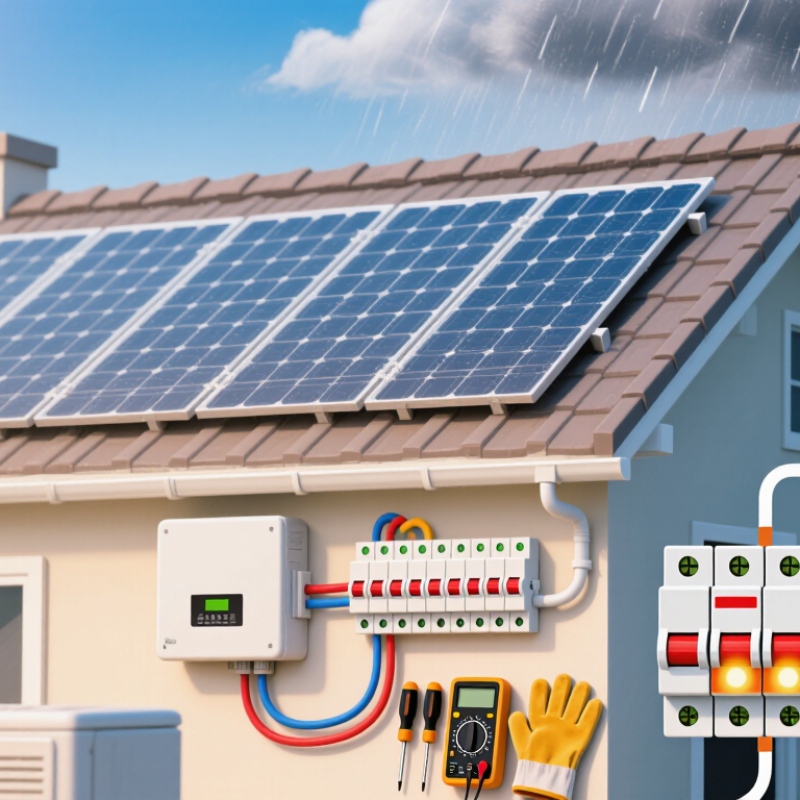
2026 Top Solar Systems Why Is My Circuit Breaker Tripping?

Solar Circuit Breaker Tripping: What It Means

A tripping solar circuit breaker is a warning, not a simple inconvenience. It disconnects power when current, heat, or a fault exceeds safe limits. The cause may involve the inverter, wiring, panel circuits, or household demand. Heavy appliances running together can overload the AC side. Moisture, damaged insulation, loose terminals, or a ground fault can also trigger protection.

During inspections, I check the breaker’s timing and conditions. Does it trip during bright midday sun, heavy rain, or appliance use? A warm breaker, burning smell, buzzing sound, or discoloration needs immediate attention. Do not repeatedly reset it. Turn off connected loads and contact a qualified solar electrician. They can test AC and DC circuits, inspect cable connections, and verify protective settings against local electrical requirements.

A single trip does not prove one specific failure. My first assumption may be wrong, especially when weather changes the system’s behavior. Keep a short record of the date, sunlight, appliances, and warning codes. That detail helps the technician find patterns faster. Older installations may also have undersized conductors or aging breakers. Never open energized equipment yourself. Solar circuits can remain dangerous, even when the main switch is off.

2026 Top Solar Systems: Why Is My Circuit Breaker Tripping?

Solar Circuit Breaker Tripping: Nominal Ratings and the 80% Continuous-Load Planning Limit

A circuit breaker may trip when current exceeds its rating, when a continuous load is planned above approximately 80% of the breaker rating, or when a short circuit, ground fault, loose connection, or inverter fault occurs. The 80% values shown are calculated planning limits for continuous loads and are not guaranteed trip points. Always follow local electrical codes and have a qualified electrician inspect repeated trips.

Common Causes of Repeated Solar Breaker Trips

Repeated solar breaker trips usually indicate an electrical fault, overload, or protection setting needing attention. The breaker is doing its job. A large inverter, electric heater, or battery charger may exceed the circuit’s continuous rating. This often appears during midday production or evening charging. Compare the trip time with solar output, household demand, and inverter records. Timing matters.

Loose terminals create heat and intermittent trips, especially inside outdoor disconnects exposed to vibration and temperature changes. Moisture may enter damaged cable glands, junction boxes, or rooftop connectors. Ground faults can trip protection immediately. Arc faults may cause clicking sounds, discoloration, or a burnt smell. Do not ignore those signs. Faulty insulation, pinched wiring, and incorrect neutral-ground connections are also possible. In some installations, the breaker rating or conductor size was selected incorrectly. That mistake is less rare than people think.

Turn off affected equipment only if the system instructions allow it, and never keep resetting the breaker. A qualified solar electrician should test insulation resistance, connection torque, polarity, grounding, and breaker coordination. They should inspect for water, rodent damage, heat marks, and corrosion. Photos and trip times can help diagnosis. I have learned that replacing the breaker first may hide the real problem. A careful inspection is slower, but safer.

2026 Top Solar Systems: Why Is My Circuit Breaker Tripping? - Common Causes of Repeated Solar Breaker Trips

Common Cause What Happens Typical Warning Signs When It Usually Occurs Recommended Response Safety Priority
Excessive circuit load Solar output and other loads combine to exceed the circuit breaker's permitted current. Trips occur when several high-power appliances operate together. Bright, high-production periods or peak household demand. Turn off nonessential loads and have the circuit capacity, conductor size, and breaker rating checked. High
Loose or damaged connection A poor termination can create resistance, heat, voltage drop, and intermittent current flow. Warm electrical odor, discoloration, buzzing, flickering, or a breaker that trips unpredictably. Under load; the problem may worsen as the connection heats. Stop resetting the breaker and arrange an inspection by a qualified electrician. Critical
Ground fault or insulation damage Current flows through an unintended path because of damaged insulation, moisture, or contact with grounded metal. Immediate or repeated trips, especially after rain; visible cable damage may be present. Wet weather, washing, condensation, or cable deterioration. Do not open enclosures or handle wiring; isolate the system only as instructed and call a qualified professional. Critical
Arc fault A damaged or poorly connected conductor can create an electrical arc that produces intense heat. Burning smell, crackling, blackened components, or rapid breaker operation. During current flow; may be intermittent when wiring moves or vibrates. Leave the breaker off if safe to do so and obtain urgent electrical service. Critical
Inverter or power-conversion fault An internal fault, abnormal current, or protective shutdown causes the associated breaker to open. Fault code, error light, repeated restart cycle, or trips limited to the inverter circuit. At startup, during grid abnormalities, or under high output. Record the displayed fault code and contact the system installer or a qualified service technician. High
Incorrect breaker or conductor sizing The protective device may operate because the circuit was not designed for the system's maximum continuous current. Trips began after an expansion, rewiring, or equipment replacement. Consistently during strong production or sustained load. Have a professional verify design calculations, conductor ampacity, overcurrent protection, and local code compliance. High
Grid voltage or frequency abnormality The inverter disconnects to protect itself and the electrical grid when supply conditions move outside permitted limits. Trips coincide with neighborhood outages, voltage fluctuations, or utility work. During storms, outages, restoration events, or periods of unstable supply. Check for a utility outage and review inverter logs; do not change protection settings without authorization. Medium–High
Moisture, corrosion, or contamination Water or corrosion reduces insulation performance and can create leakage current or a short circuit. Trips after rain, condensation, flooding, or long periods of humidity; corrosion may be visible. Wet or humid conditions. Keep the equipment de-energized if water has entered it and request professional testing. Critical
Aging or mechanically damaged breaker Internal wear, heat damage, or a weakened mechanism can cause nuisance trips or failure to reset. The breaker feels loose, will not stay reset, shows heat discoloration, or trips at modest load. At inconsistent times, often after repeated thermal stress. Do not replace it with a higher-rated breaker; have the device and circuit tested and replaced if necessary. High
Wildlife or physical cable damage Rodents, birds, construction work, UV exposure, or abrasion can damage insulation and connectors. Chewed cables, exposed conductors, displaced conduit, or trips that began after maintenance or building work. Intermittently, or when the damaged section becomes wet or moves. Avoid touching the damaged area and arrange a professional inspection, repair, and insulation test. Critical

Important safety note: A circuit breaker is a protective device, not a fault to be bypassed. Repeated trips should be investigated by a qualified electrician or solar professional. Never install a larger breaker, open energized equipment, or repeatedly reset a breaker that trips immediately.

How to Diagnose a Solar System Breaker Problem

A tripping solar breaker needs diagnosis, not repeated resets.
Stop if you smell burning, hear buzzing, or see melted insulation.
Never open energized equipment.

Record when the breaker trips. Morning, midday, and rainy conditions suggest different causes.

A midday trip may indicate thermal overload, a loose termination, or excessive household demand. A trip after rain can point toward moisture intrusion or insulation leakage.

Check whether the inverter, battery, or utility-side breaker is involved.

NREL’s PV System Operations and Maintenance Best Practices recommends reviewing alarms, inspection records, and performance trends before replacing parts. That step is often skipped.

Turn off normal loads, then reset the breaker only once, if the equipment manual permits it.

If it trips again, leave it off.

A qualified electrician should test voltage, current, grounding, insulation resistance, and terminal torque. Do not remove covers yourself.

The IEA PVPS Trends in Photovoltaic Applications 2024 report recorded more than 400 GW of new solar capacity worldwide in 2023, increasing the importance of consistent maintenance skills.

NFPA 70B also emphasizes documented, condition-based electrical maintenance.

Do not assume the inverter is guilty.

In field service, a midday trip can reveal a loose connection instead. I have seen temperature, dust, and poor ventilation combine into one confusing symptom.

The diagnosis may still be wrong without measurements.

Record every trip, weather condition, alarm code, and recent electrical change for the technician.

Safe Steps to Take Before Resetting the Breaker

2026 Top Solar Systems: Why Is My Circuit Breaker Tripping?

Safe Steps to Take Before Resetting the Breaker

A tripping breaker is a warning, not a minor inconvenience. Solar circuits can trip because of overloads, ground faults, damaged wiring, moisture, or inverter problems. Daylight matters. Photovoltaic panels may continue producing electricity, even when the main breaker is off. Battery systems can also supply power after sunset.

Do not reset the breaker repeatedly. Turn off nearby appliances and keep people away from the panel. Look for burning smells, buzzing, smoke, melted plastic, or unusual warmth. Stop immediately if you notice any of these signs. The National Fire Protection Association’s Home Structure Fires report estimates that electrical distribution and lighting equipment causes about 51,000 home fires annually in the United States. A hot or damaged panel deserves professional attention.

If conditions appear normal, follow the shutdown sequence in your system manual. Never remove covers or touch exposed conductors. Contact a licensed solar electrician when the breaker trips again, the inverter shows a fault, or rain has entered outdoor equipment. The National Renewable Energy Laboratory’s PV Operations and Maintenance guidance recommends documented inspections and qualified fault diagnosis. I once treated a single trip as harmless; that assumption was careless. A loose connection can worsen quietly. Record the time, weather, loads, and displayed error code before service arrives. This small record can shorten troubleshooting and prevent another unsafe reset.

When to Call a Qualified Solar Electrician

2026 Top Solar Systems: Why Is My Circuit Breaker Tripping?

A tripping breaker can signal an overloaded circuit, loose connection, moisture, or inverter fault. Do not keep resetting it. Repeated trips can hide dangerous heat or damaged wiring. Note when the trip occurs. Does it happen during bright midday sun, heavy rain, or after a new appliance starts? A warm panel, buzzing sound, burning smell, or scorch mark requires immediate attention. Stay clear.

Call a qualified solar electrician when the breaker trips more than once, the inverter displays a fault, or the system stops producing power. Choose a professional licensed or certified under local electrical rules. They should understand both household wiring and photovoltaic systems. A proper inspection may include current measurements, insulation testing, connection checks, and review of inverter records. Guesswork is not enough.

Never open the inverter or remove covers yourself. Solar equipment can remain energized, even after the main supply is switched off. If water has entered the equipment, keep away and contact an electrician promptly. An experienced technician can separate a panel fault from a household circuit problem. That distinction matters. It is easy to blame the solar array too quickly. Sometimes an aging breaker, undersized circuit, or recently added appliance is the real cause. Provide the electrician with trip times, weather conditions, error codes, and any unusual sounds. Small details often change the diagnosis.

FAQS

Why does a solar breaker keep tripping?

Repeated trips may indicate overload, damaged wiring, moisture, or a ground fault. The breaker is warning you. Compare the trip time with solar production, household demand, and battery charging. The exact cause is not always obvious.

Can high household demand cause a solar breaker trip?

Yes. Large inverters, heaters, and battery chargers can exceed a circuit’s continuous rating. Trips may occur around midday or during evening charging. Record which appliances were operating.

What signs suggest a dangerous electrical fault?

Watch for burning smells, buzzing, smoke, melted plastic, discoloration, or unusual warmth. Clicking sounds can also suggest arcing. Stop immediately if these signs appear. Do not touch the panel.

Should I keep resetting the breaker?

No. Repeated resetting can hide a worsening fault. Turn off nearby appliances if the system instructions allow it. Keep people away from the panel. One reset is not a diagnosis.

Can rain or moisture cause repeated trips?

Yes. Water may enter damaged cable glands, outdoor disconnects, junction boxes, or rooftop connectors. Moisture can create ground faults and immediate trips. Do not open wet equipment.

Can the solar system produce power after the breaker is off?

Yes. Panels may continue producing electricity during daylight. Batteries may also supply power after sunset. Never assume the circuit is completely safe. Avoid exposed conductors.

What should I record before calling an electrician?

Write down the trip time, weather, active appliances, solar output, and displayed error code. Take safe photos from a distance. These details can shorten troubleshooting. Small records help.

What should a qualified electrician inspect?

They should test insulation, polarity, grounding, connection torque, and breaker coordination. They should inspect for water, corrosion, heat marks, rodent damage, and pinched cables. Replacing the breaker first may hide the real problem. A careful inspection is slower, but safer.

Conclusion

A solar circuit breaker that trips is a safety response, indicating that the electrical system may be experiencing excessive current, a short circuit, a ground fault, overheating, or an equipment connection problem. If you are asking, “why is my solar power system tripping the circuit breaker,” repeated trips should not be ignored. Possible causes include damaged wiring, moisture intrusion, an overloaded circuit, loose terminals, inverter faults, or an imbalance between system output and electrical demand.

Before resetting the breaker, switch off relevant appliances, look for visible damage, unusual heat, burning smells, or water near electrical components, and keep clear of exposed wiring. Reset the breaker only once if everything appears safe, and monitor the system carefully. If it trips again, leave it off and contact a qualified solar electrician. A professional can safely inspect the inverter, panels, wiring, grounding, and breaker operation, identify the underlying issue, and complete any necessary repairs or testing.

Charlotte

Charlotte

Charlotte is a seasoned marketing professional with a deep understanding of the company's portfolio and a passion for elevating its presence in the market. With a keen eye for detail and a commitment to excellence, she ensures that our professional blog is regularly updated with insightful articles......