How to Calculate the Right Home Solar System Capacity?

Time:2026-10-17 Author:Aria
0%

Choosing the right solar system begins with your household’s real energy habits, not a tempting panel number. The key question is how to calculate home solar system capacity accurately enough for daily needs, seasonal changes, and future appliances. A system that looks impressive on paper may still underperform during cloudy winter weeks.

Start with twelve months of electricity bills. Record monthly kilowatt-hours, peak usage, and unusual changes. A family using 900 kWh in summer may need a different design from a home using 450 kWh year-round. Consider roof direction, shading from trees, available space, and local sunlight conditions. Even a chimney shadow can reduce output across several panels.

Small details matter.

Professional designers usually estimate solar production, then allow for temperature, inverter losses, wiring, dust, and aging. Battery storage requires separate thinking because backup duration depends on essential loads, not total household demand. Refrigerators, pumps, medical equipment, and heating systems can change the calculation quickly. It is also wise to check equipment ratings and installation requirements with a qualified, licensed installer.

The calculation is not perfectly precise. Weather changes. Families change. My own planning approach would compare conservative, typical, and high-use scenarios instead of trusting one attractive estimate. Oversizing may increase cost, while undersizing can leave you buying more grid electricity than expected. Reliable decisions combine measured consumption, verified solar data, reputable equipment specifications, and professional site assessment. This guide explains the process clearly, while recognizing that final capacity should reflect your property, budget, local conditions, and long-term energy goals.
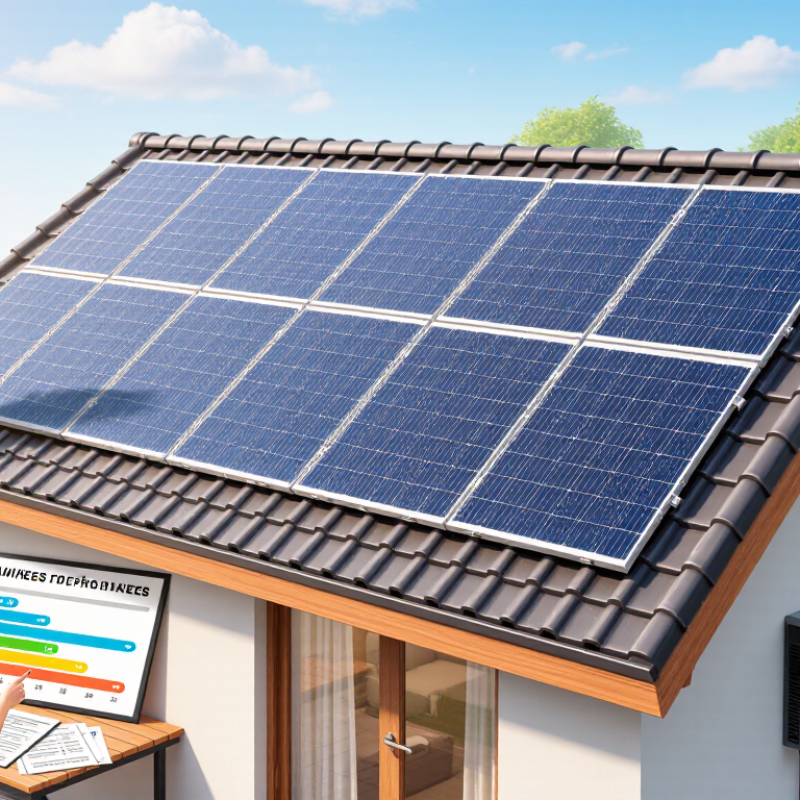
How to Calculate the Right Home Solar System Capacity?

Define Your Household’s Daily Electricity Consumption

How to Calculate the Right Home Solar System Capacity?

Define Your Household’s Daily Electricity Consumption

Before sizing a solar system, identify how much electricity your household actually uses. The key measurement is kilowatt-hours, shown as kWh on most utility bills. Do not rely on memory. Review at least twelve months of bills and calculate the average daily use by dividing annual consumption by 365. Then compare summer and winter figures, because air conditioning and electric heating can change the result sharply.

A simple appliance audit adds useful detail. Multiply an appliance’s wattage by its daily operating hours, then divide by 1,000. For example, a 100-watt refrigerator running for ten equivalent hours uses about 1 kWh daily. A 2,000-watt kettle used for fifteen minutes consumes about 0.5 kWh. Check nameplates, but remember that rated power is not always actual consumption. Motors cycle. Chargers sit idle.

Measure real habits.

My first estimate was too low because I ignored standby loads, evening cooking, and a small water pump. A plug-in energy meter can reveal these hidden patterns over several days. Record weekdays separately from weekends. Include future changes, such as an electric vehicle, larger freezer, or home office. Avoid adding an arbitrary percentage without evidence. A modest allowance may cover uncertainty, but excessive oversizing increases cost. Your final daily figure should reflect measured use, seasonal peaks, and realistic household changes rather than an idealized routine.

Assess Solar Resource and Roof Conditions at Your Location

Solar capacity starts with sunlight, not a panel count.

At the site, record shading across the day and through different seasons. A tree may leave the roof bright at noon but shade it during winter mornings. The World Bank and ESMAP Global Solar Atlas provides annual and monthly solar irradiation data at roughly 250-meter resolution. Use its global horizontal irradiation values as a screening reference, not a final design figure.

Roof direction matters.

In the Northern Hemisphere, south-facing surfaces usually receive stronger annual production, but east-west roofs can still perform well. Measure the roof’s azimuth, pitch, usable area, and nearby obstructions. I would not trust a single sunny afternoon. Clouds, dust, snow, and high temperatures change output.

Roof condition also sets the practical system size.

Check cracked tiles, corrosion, drainage paths, and structural capacity before placing modules. Leave access around vents and fire-safety routes. A roof needing replacement soon may make a smaller temporary system more sensible. It is an easy detail to overlook.

NREL’s PVWatts documentation uses typical meteorological year data for production estimates and applies a default system-loss assumption of 14%.

Treat that figure carefully. Local soiling, wiring, inverter, mismatch, and shading losses may differ. Enter measured conditions whenever possible, then compare the estimate with the household’s hourly electricity demand. The first calculation may be wrong. That is useful. Recheck the roof, weather file, and shade assumptions before choosing capacity.

Calculate the Solar Panel Capacity Your Home Requires

How to Calculate the Right Home Solar System Capacity?

Your home’s required solar capacity begins with real electricity use, not roof size. Check twelve months of utility bills and calculate your average daily consumption. For example, 900 kWh per month equals about 30 kWh per day. Then divide this figure by your area’s average peak sunlight hours. If your location receives four hours, divide 30 by 4. Include system losses from heat, dust, wiring, and inverter conversion.

Using an 80% performance factor the calculation becomes 30 ÷ 4 ÷ 0.8, or approximately 9.4 kW. A 400-watt panel would require about 24 panels.

Roof conditions can change the answer. A south-facing roof may perform differently from an east-facing roof. Shade from a chimney or nearby tree can reduce output during key hours. Seasonal demand matters too. Air conditioning may raise summer consumption, while heating can increase winter use. My first estimate is rarely perfect. Actual production should be checked after installation and compared with monthly bills.

Tips: Use your highest-use months, not only the annual average. Leave space between panels for safe maintenance. Ask a qualified solar professional to review roof strength, local sunlight data, electrical limits, and permit requirements. Battery capacity should be calculated separately because it depends on backup hours, nighttime loads, and outage expectations. Oversizing the system may waste money, while undersizing it can leave your home dependent on grid electricity.

Adjust System Size for Efficiency Losses and Future Energy Needs

Correct sizing starts with future consumption, not today’s electricity bill. The U.S. Energy Information Administration reported average household electricity use of 10,791 kWh in 2022. That figure is only a starting point. Add an electric vehicle, heat pump, workshop, or larger family. Model each load by month and hour where possible. A winter heat pump can change the design more than a summer refrigerator.

Then adjust the system for real-world efficiency losses. NREL’s PVWatts documentation uses 14% as a default total-loss assumption, covering wiring, mismatch, inverter losses, shading, and soiling. If a roof produces 1,400 kWh per installed kilowatt annually, 10,800 kWh requires 7.7 kW before losses. Applying the 14% adjustment raises the practical requirement to roughly 9.0 kW. This calculation fails if the roof has afternoon shade or poor orientation.

Future performance needs attention too. NREL field-performance research commonly uses about 0.5% annual module degradation as a planning benchmark. A ten-year forecast may therefore require approximately 5% additional capacity, before considering new appliances. IEA PVPS Task 13 also highlights soiling, shading, and temperature as important yield variables. I would not automatically add 20% “for safety.” That can waste roof space and money. A better approach is to compare three scenarios: current demand, expected electrification, and unusually high consumption. Check the result against local solar data, roof measurements, and an installer’s shade study. Spreadsheet confidence is not the same as rooftop accuracy.

How to Calculate the Right Home Solar System Capacity?

System size is estimated from annual electricity demand, expected future consumption, solar yield, and efficiency losses.

Assumptions: Current annual electricity use is 8,000 kWh, demand grows by 2% per year, gross solar yield is 1,400 kWh per kWp annually, and total system losses are estimated at 20%. The resulting net yield is 1,120 kWh per kWp per year.

Calculation: Required system capacity = projected annual energy demand ÷ net annual solar yield. Planning for future consumption helps avoid undersizing the system today.

Select the Battery and Inverter Capacity for Reliable Operation

Choosing battery and inverter capacity requires more than adding appliance wattages. Record each appliance, its running power, starting surge, and daily operating hours. A refrigerator may use modest energy but demand a sharp startup surge. Pumps and power tools can behave similarly.

The inverter should handle the highest simultaneous load, not just the average household demand. Add the running watts of essential appliances, then allow room for motor starting currents. A practical margin of 20 to 30 percent reduces nuisance shutdowns. Purely resistive loads, such as heaters, need different planning from electronic equipment. Check the inverter’s continuous and surge ratings carefully.

Battery capacity depends on daily energy use, backup hours, and the battery’s usable percentage. If essential loads consume 8 kilowatt-hours overnight, a 10 kilowatt-hour battery may provide less than expected after reserve limits and conversion losses. My first estimate was too optimistic because I ignored winter heating demand. That mistake matters. Measure real consumption across several days, including cloudy weather and evening peaks. A simple spreadsheet helps, but it cannot replace an on-site assessment. A qualified installer should verify cable sizing, ventilation, protection equipment, and local electrical requirements before installation. Small systems also need careful design.

FAQS

How can I measure my household’s daily electricity use?

Review at least twelve months of electricity bills. Divide annual usage by 365. Compare summer and winter totals. Memory is unreliable.

How do I estimate an appliance’s daily electricity consumption?

Multiply watts by daily operating hours, then divide by 1,000. A 100-watt refrigerator running ten hours uses about 1 kWh. A 2,000-watt kettle used fifteen minutes uses about 0.5 kWh. Rated power may differ from real use.

What daily usage figure should guide solar system sizing?

Use measured consumption, seasonal peaks, and realistic future changes. Include standby loads, evening cooking, pumps, and charging equipment. My first estimate was too low.

How do I calculate the required solar capacity?

Divide daily kWh by peak sunlight hours and system performance. For 30 kWh daily use, four sunlight hours, and 80% performance, the result is about 9.4 kW. Losses matter.

How many solar panels might a 9.4 kW system need?

Divide system capacity by one panel’s capacity. With 400-watt panels, 9.4 kW requires about 24 panels. Roof space and spacing may change the final count.

Which roof conditions can reduce solar production?

Shade from trees, chimneys, or nearby buildings can reduce output during important hours. Roof direction and angle also matter. An east-facing roof may perform differently from a south-facing roof.

How should I account for solar system losses?

Allow for heat, dust, wiring, shading, and inverter conversion. A 14% loss assumption is a useful planning starting point. Local measurements may show something different.

Should I include future electricity needs?

Yes, consider an electric vehicle, heat pump, workshop, larger freezer, or home office. Model these loads by month and hour when possible. Avoid adding an unsupported safety percentage.

Is battery sizing the same as solar panel sizing?

No. Battery capacity depends on nighttime usage, backup hours, and outage expectations. Calculate it separately. More storage is not always better.

Conclusion

Calculating the right home solar system capacity starts with understanding your household’s average daily electricity consumption. Review recent utility bills, identify high-use appliances, and estimate how much energy your home uses throughout the year. Next, assess your location’s solar resource, including average peak sunlight hours, seasonal weather, roof orientation, available space, shading, and roof condition. These factors determine how much electricity your panels can generate and whether the planned installation is practical.

To learn how to calculate home solar system capacity, divide your daily energy needs by the expected solar production per unit of panel capacity, then account for efficiency losses caused by temperature, wiring, dust, and system conversion. It is also wise to consider future needs, such as electric vehicles or home expansions. Finally, select an inverter that can handle the system’s output and size the battery according to your backup goals, nighttime consumption, and preferred reserve capacity. A balanced design should meet daily demand reliably without creating unnecessary cost or unused generation.

Aria

Aria

Aria is a dedicated marketing professional with a deep passion for innovative strategies and a keen understanding of our company's product offerings. With a wealth of experience in the industry, Aria excels at crafting engaging content that highlights the unique features and benefits of our......