When exploring battery technologies, many ask, "what is the difference between lifepo4 and li-ion batteries?" Lithium Iron Phosphate (LiFePO4) and Lithium-ion (Li-ion) batteries are popular choices due to their performance. Reports from industry experts indicate that the global lithium-ion battery market is expected to grow significantly, reaching $129 billion by 2027.
LiFePO4 batteries offer advantages in safety and lifespan. They typically have a longer cycle life, averaging over 2000 cycles at 80% depth of discharge. In contrast, standard Li-ion batteries usually provide 500-1500 cycles. Yet, Li-ion batteries often outperform in energy density, making them suitable for applications where space is limited.
Moreover, the environmental impact of both types differs. LiFePO4 is seen as more eco-friendly due to its chemical stability. However, critics argue about the mining practices associated with lithium-ion technologies. Understanding these differences is crucial for consumers and businesses alike, guiding informed choices in battery selection. Each option presents unique strengths and weaknesses that must be carefully considered.
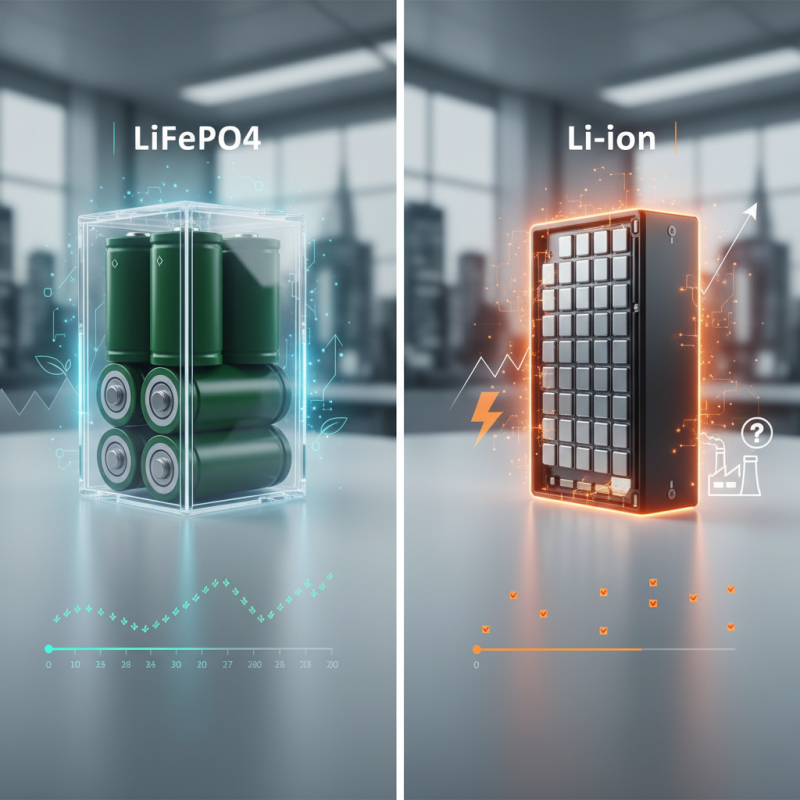
The differences between LiFePO4 and Li-ion batteries primarily arise from their chemical makeup. LiFePO4, or lithium iron phosphate, uses iron phosphate as its cathode material. This composition offers high thermal stability and safety. In contrast, traditional Li-ion batteries typically use cobalt or nickel in their cathodes. This leads to higher energy density but increased risks, such as overheating.
When it comes to cycle life, LiFePO4 batteries shine. They often provide about 2,000 to 5,000 charge cycles, significantly more than their Li-ion counterparts, which average around 500 to 1,500. However, LiFePO4 has a lower energy density, meaning it stores less energy in the same space, which can be a drawback for some applications. It's essential to weigh these factors based on your energy needs.
Tip: If you're considering which battery type to use, think about your application. LiFePO4 works well in stationary energy storage or electric vehicles needing longevity and safety. On the other hand, Li-ion may better suit portable devices.
Remember, while both battery types have their strengths, they're not universally perfect. Choose based on specific requirements. Proper research can prevent costly mistakes down the line.
When comparing LiFePO4 (lithium iron phosphate) and Li-ion batteries, energy density is a crucial factor. Li-ion batteries generally offer higher energy density, often around 150-200 Wh/kg. In contrast, LiFePO4 batteries typically have an energy density of 90-120 Wh/kg. This difference can significantly impact their applications, especially in electric vehicles and portable electronics.
LiFePO4 batteries excel in safety and longevity. They can endure up to 2000 cycles with minimal capacity loss. This is impressive compared to Li-ion, which often faces a degradation after 500-1000 cycles. The thermal stability of LiFePO4 makes it less prone to overheating, enhancing safety profiles. In power tools or storage systems, this reliability is essential.
However, energy density isn't everything. Choosing the right battery involves trade-offs. Applications requiring lighter weight may favor Li-ion for its compact energy storage. Conversely, sectors emphasizing safety and durability may lean toward LiFePO4 despite its lower energy density. Understanding these distinctions helps in making informed decisions tailored to specific needs.
When comparing LiFePO4 (Lithium Iron Phosphate) batteries with traditional Li-ion batteries, cycle life and longevity are crucial factors. LiFePO4 batteries typically offer a cycle life of over 2000 cycles. This is significantly higher than many Li-ion batteries, which often range between 500 to 1500 cycles. The extended life of LiFePO4 can be advantageous for long-term applications. Users may find this beneficial, especially in renewable energy systems.
However, not everything about LiFePO4 is perfect. They tend to have lower energy density compared to Li-ion batteries. This means they might require more space for the same amount of power. In applications where weight and size are critical, this could be a drawback. Additionally, the discharge rate can be lower in some circumstances, impacting performance.
Longevity often translates to cost savings over time. Higher upfront costs for LiFePO4 can be offset by their extended lifespan. Yet, the perception of value might differ based on individual needs. Some may prefer the lighter weight of Li-ion despite the shorter lifespan. Evaluating these aspects is vital. A thorough understanding could guide better choices for energy storage solutions.
When comparing the safety features and thermal stability of LiFePO4 and traditional Li-ion batteries, distinct differences emerge. LiFePO4 batteries are known for their robust thermal stability. They maintain structural integrity even at elevated temperatures. This characteristic reduces the risk of thermal runaway, a phenomenon often associated with Li-ion batteries. Li-ion batteries can be prone to overheating and combustion if not managed properly.
Moreover, the chemical composition of LiFePO4 contributes to its superior safety. It is inherently less reactive, making it a safer choice for applications requiring high reliability. The design of LiFePO4 batteries also mitigates excessive heat generation during charging and discharging cycles. In contrast, Li-ion batteries can generate significant heat, necessitating careful thermal management systems.
However, not all is perfect with LiFePO4 technology. Its energy density is generally lower than that of Li-ion batteries. This can lead to larger and heavier designs for the same capacity, which may be a drawback in certain applications. Balancing safety with performance is crucial. Manufacturers must prioritize engineering solutions that enhance both safety features and energy efficiency.
The cost analysis of LiFePO4 and Li-ion batteries reveals significant market trends. On average, LiFePO4 batteries tend to cost more upfront. However, they offer a longer lifespan, which can lead to cost savings over time. This durability is appealing to many consumers. In contrast, Li-ion batteries are generally cheaper, but they may require replacements more frequently.
Market demand influences battery pricing. As renewable energy grows, interest in LiFePO4 is rising. Its stability and safety features are often used in solar energy storage systems. Despite the higher initial investment, many believe it's worth the long-term reliability. Li-ion batteries, while affordable, face concerns about safety risks. This has led some users to reconsider their choices.
Understanding these costs can challenge assumptions. A lower price does not always mean better value. Users need to evaluate their specific needs and compare lifespan versus upfront costs. This nuanced analysis helps potential buyers make informed decisions.
| Feature | LiFePO4 (Lithium Iron Phosphate) | Li-ion (Lithium-ion) |
|---|---|---|
| Energy Density | 90-120 Wh/kg | 150-250 Wh/kg |
| Cycle Life | 2000-5000 cycles | 500-1500 cycles |
| Charging Time | 4-6 hours | 2-4 hours |
| Thermal Stability | Excellent | Moderate |
| Cost per kWh | $300-$600 | $200-$400 |
| Weight | Heavy | Light |
: LiFePO4 uses iron phosphate, offering safety and stability, while Li-ion uses cobalt or nickel, leading to higher energy density.
LiFePO4 batteries provide 2,000 to 5,000 cycles. Li-ion batteries range from 500 to 1,500 cycles.
LiFePO4 batteries excel in safety due to their thermal stability, reducing the risk of overheating.
Li-ion batteries have 150-200 Wh/kg, while LiFePO4 has about 90-120 Wh/kg, affecting application suitability.
They offer longevity and safety, making them ideal for applications like renewable energy systems.
They have lower energy density and may require more space, which could limit their use in some applications.
Although they are more expensive initially, their long cycle life can lead to cost savings over time.
Li-ion batteries are ideal for portable devices due to their higher energy density and lighter weight.
Yes, considerations include energy density, safety, longevity, and application requirements based on specific needs.
Consider energy storage requirements and the balance between safety and performance to avoid costly mistakes.
In exploring what is the difference between lifepo4 and li-ion batteries, several key factors come into play. The first is the chemical composition, where Lifepo4 (lithium iron phosphate) offers different electrochemical properties compared to traditional Li-ion batteries, typically utilizing lithium cobalt oxide or similar compounds. This leads to notable differences in energy density, with Li-ion batteries generally providing higher energy storage capacity, making them more suitable for portable electronics.
Further distinctions can be observed in their cycle life and longevity, where Lifepo4 batteries excel, often lasting significantly longer than Li-ion counterparts. Safety features and thermal stability are also critical considerations; Lifepo4 batteries are known for their enhanced thermal stability, reducing risks associated with overheating. Lastly, a cost analysis indicates that while Lifepo4 batteries may have higher upfront costs, their longevity and safety features can make them a more economical choice in the long run, especially for applications demanding high reliability.

Vires Energy