Top 10 Home Lithium Battery Storage Safety Risks?

Time:2026-09-27 Author:Oliver
0%

Home lithium battery storage is becoming common in garages, utility rooms, and outdoor cabinets. It can reduce grid dependence, but stored energy creates real fire and injury hazards. The important question is not only, “Does the battery work?” It is also, “what are the safety risks of home lithium battery storage” after years of heat, charging, and maintenance?

Industry evidence deserves careful attention. EPRI’s Battery Energy Storage System Failure Event Database documents recurring events involving thermal runaway, smoke, fire, and delayed re-ignition. NREL’s battery safety guidance highlights ventilation, detection, spacing, and emergency response as essential controls. UL Solutions also explains that UL 9540A testing evaluates how thermal runaway can spread between cells, modules, and nearby equipment. These findings show why certification alone cannot replace correct installation.

Small details matter. A blocked vent, loose cable, or swollen battery may become an early warning sign. A garage can trap heat, smoke, and toxic gases faster than many homeowners expect. NFPA 855 and related fire-safety guidance provide useful planning principles, but household conditions vary widely. No checklist is perfect.

This guide examines ten major risks, including overheating, short circuits, installation errors, water exposure, poor ventilation, and inadequate monitoring. It also considers user behavior, because forgotten alarms and improvised repairs can defeat otherwise sound engineering. The risks are manageable when manufacturers’ instructions, qualified installers, certified equipment, and local fire-safety requirements work together. Still, uncertainty remains, especially as residential systems become larger and more complex.
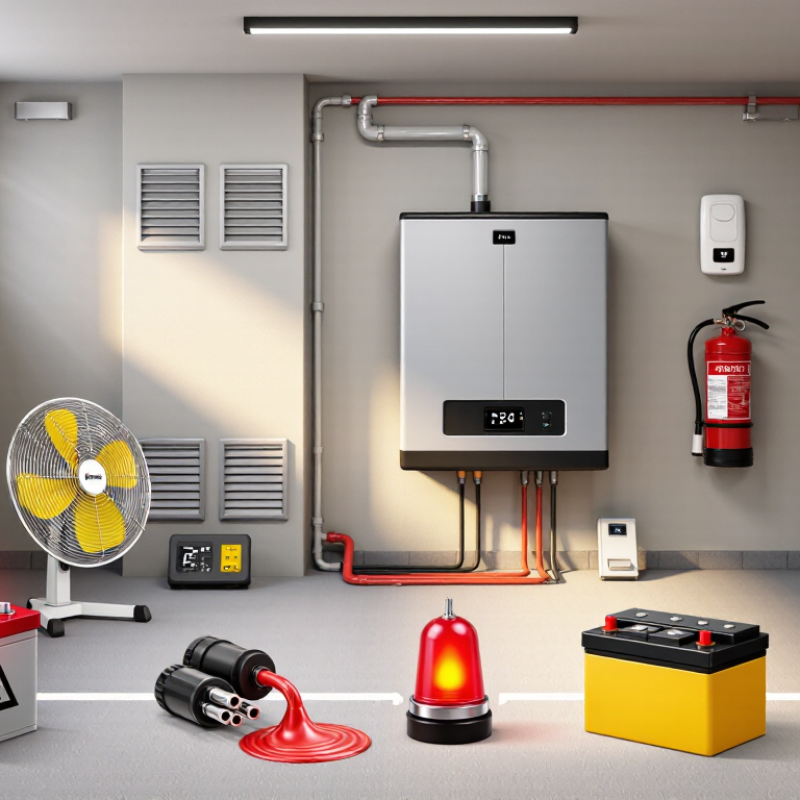
Top 10 Home Lithium Battery Storage Safety Risks?

Battery Chemistry and Why It Shapes Home Storage Safety

Top 10 Home Lithium Battery Storage Safety Risks?

Battery Chemistry and Why It Shapes Home Storage Safety

A home battery’s chemistry affects how it responds to heat, damage, and charging faults. Lithium iron phosphate, or LFP, generally offers better thermal stability than nickel-rich chemistries such as NMC. But no lithium-ion chemistry is fireproof. The electrolyte can burn, and a failing cell may release heat and gases that threaten nearby cells.

The International Energy Agency’s Global EV Outlook 2024 estimates that LFP supplied about 40% of the global electric-car battery market in 2023, up from less than 10% in 2020. This is an electric-vehicle figure, not a home-storage safety ranking. Still, it shows how quickly chemistry choices are changing. That distinction matters.

The U.S. Department of Energy’s Energy Storage Safety Strategic Plan describes thermal runaway and the risk of fire spreading between cells. In a home, spacing, ventilation, and a suitable installation location can affect how a battery fault develops. A small utility room beside cardboard boxes is not the same environment as a clear, well-ventilated area. Chemistry labels alone cannot capture cell design, battery management, or aging. I would not treat “LFP” as a substitute for checking the system’s test documentation and installation guidance.

Electrical Shock, Short-Circuit, and Arc-Fault Hazards

Top 10 Home Lithium Battery Storage Safety Risks: Electrical Shock, Short-Circuit, and Arc-Fault Hazards

Home lithium battery systems can remain electrically energized after shutdown. Internal cells may continue supplying dangerous DC voltage. A loose terminal, damaged cable, or dropped tool can create a short circuit within seconds. DC arcs are especially difficult to extinguish. They can produce intense heat, molten metal, and ignition near combustible materials. The U.S. Consumer Product Safety Commission reported more than 25,000 lithium-ion battery fire incidents from 2017 to 2022, covering many product types. This figure is not limited to home energy storage, but it shows the scale of battery-related risk.

Arc-fault protection is not a universal solution. Its performance depends on system design, fault location, and correct installation. EPRI’s Battery Energy Storage System Failure Event Database has recorded more than 60 failure events since 2011, showing that rare failures still deserve serious planning. NFPA 855 and UL 9540A emphasize separation, testing, ventilation, and emergency response. Still, standards cannot correct poor workmanship. That is the uncomfortable part.

Tips: Keep metallic objects away from terminals. Never open an energized cabinet. Inspect cables for cuts, heat marks, or loose connections. Use a qualified electrician for installation and testing. Maintain clear access around disconnects. A label is not protection. If smoke, crackling, or a burning smell appears, leave the area and contact emergency services. Recheck the system annually; assumptions can age badly.

Thermal Runaway, Fire, and Explosion Risks

Thermal runaway is a chain reaction inside a battery cell: heat builds faster than it can escape, potentially damaging neighboring cells. It may begin after a manufacturing defect, impact, aging, or charging outside the system’s specified conditions. Early clues can include unusual warmth, swelling, a sharp chemical smell, or repeated fault alerts. Sometimes there is no clear warning. That uncertainty matters.

A hot battery is not just a hot appliance. During failure, cells can release flammable gases and intense heat. If those gases accumulate in an enclosed area, an ignition can cause a flash fire or pressure event. Smoke may also contain harmful substances. Keep the storage system in its approved location, with clear airflow and no cardboard, solvents, or other combustible clutter nearby. Follow the installation and charging instructions; do not open or repair damaged equipment yourself.

Small habits help, but they cannot eliminate risk. Check the unit occasionally for new noises, visible damage, or warning messages, and keep smoke alarms working nearby. Do not ignore a fault just because the system still supplies power. If you notice smoke, hissing, or rapidly increasing heat, leave the area and contact emergency services from a safe distance. Do not approach the unit to investigate. I would not rely on smell alone; by then, a problem may already be serious.

Top 10 Home Lithium Battery Storage Safety Risks: Thermal Runaway, Fire, and Explosion Risks

No. Safety risk How it can arise Possible warning signs Potential consequences Practical precautions
1 Thermal runaway Internal cell failure, severe overheating, physical damage, or an electrical fault can trigger self-heating that spreads between cells. Unusual heat, swelling, hissing, smoke, or a sharp chemical odor may occur, but an event can develop with little warning. Rapid fire, intense heat, and release of hazardous gases; nearby cells or equipment may also ignite. Use a certified system installed as directed. Keep the unit undamaged and unobstructed. If it appears to be overheating or smoking, leave the area and call emergency services.
2 Fire and fire spread A battery fault, nearby fire, overheated connection, or combustible materials close to the system can start or spread a fire. Smoke, flames, unusual heat, alarms, or visible damage; warning time may be limited. Burns, smoke exposure, structural damage, and fire spreading to other equipment or parts of the home. Follow required installation clearances and local fire and building codes. Keep exits accessible and combustible storage away from the system. Do not approach a battery fire; evacuate and contact emergency services.
3 Flammable gas ignition or explosion Some battery failures can release flammable gases. If gases accumulate in an enclosed space and meet an ignition source, a fire or explosion may result. Gas release may not be detectable by sight or smell. Hissing, smoke, or a strong odor can signal a fault, but absence of these signs does not guarantee safety. Pressure effects, fire, severe injury, and damage to the building. Install only in locations permitted by the system instructions and applicable codes. Never enclose a system in an unapproved cabinet or block specified ventilation. If a fault is suspected, leave without operating switches or equipment in the affected area and call emergency services.
4 Short circuit and electrical arcing Damaged cables, loose or incorrect connections, conductive debris, or faulty components can create a short circuit or arc. Sparking, crackling, a burning smell, damaged insulation, tripped protection devices, or unexpected shutdown. Electric shock, burns, equipment damage, and ignition of nearby materials. Have installation and repairs performed by qualified professionals. Do not touch exposed conductors or attempt repairs. Keep the system and wiring protected from physical damage.
5 Incorrect installation or electrical incompatibility Improper wiring, unsuitable components, incorrect settings, or failure to follow the system’s installation requirements can cause abnormal operation or overheating. Repeated error messages, unexplained shutdowns, overheating connections, or protective devices that trip repeatedly. Electric shock, fire, damage to the battery or connected equipment, and loss of backup power. Use compatible equipment and follow the manufacturer’s instructions and local electrical codes. Have commissioning and any configuration changes completed by a qualified installer.
6 Charging or battery-management protection failure A failed control, sensor, battery-management system, or incorrect charger configuration may allow operation outside the battery’s permitted limits. Persistent alarms, abnormal charging behavior, unexpected temperature changes, or repeated protective shutdowns. Cell damage, overheating, reduced service life, or in severe cases, thermal runaway and fire. Use the approved charging and control equipment for the system. Do not bypass safety limits, alter settings without authorization, or ignore recurring alarms.
7 Mechanical damage or puncture Impact, crushing, drilling, dropping, or damage during transport or nearby construction can compromise cells, cables, or protective enclosures. Dents, cracks, a damaged enclosure, loose parts, or an unusual odor, sound, or temperature after an impact. Internal short circuit, hazardous chemical exposure, electric shock, or delayed fire. Protect the system from impact and unauthorized access. Do not drill into or modify the unit. After significant damage, keep clear and contact the installer or emergency services as appropriate.
8 Excessive temperature or poor heat management Operation outside the specified temperature range, blocked air paths, direct heat sources, or a poorly suited installation location can contribute to overheating or performance problems. High-temperature warnings, repeated derating or shutdowns, or the enclosure becoming unusually hot. Accelerated battery degradation, protective shutdown, or increased risk of a thermal event. Install and operate the system within its specified environmental limits. Keep required air paths clear and follow the instructions for indoor or outdoor placement.
9 Water ingress, flooding, or corrosion Flooding, leaks, condensation, or water entering damaged equipment can cause corrosion, short circuits, or hazardous energized parts. Visible water, moisture inside or around the enclosure, corrosion, or unexplained faults after water exposure. Electric shock, equipment failure, short circuit, and possible fire. Use only equipment and locations suitable for the expected environment. Keep the installation away from known leak and flood hazards where possible. Never touch or operate equipment that may be wet; contact qualified help.
10 Degradation, neglected faults, or unsafe handling Age, repeated stress, unnoticed damage, improper storage, or ignored alarms can reduce reliability and leave a developing fault unaddressed. Persistent fault codes, unexpected capacity loss, swelling, leakage, corrosion, or changes in normal operation. Loss of backup capability, electric shock, exposure to hazardous materials, or fire if a fault worsens. Follow the system’s inspection and service guidance. Do not open, dismantle, or dispose of batteries in household waste. Arrange assessment by qualified service personnel and use approved battery recycling or collection channels.

Safety note: This table describes general hazards, not a quantified ranking or a substitute for product instructions, local codes, or professional assessment. For smoke, fire, suspected gas release, or a damaged battery, evacuate, keep others away, and call emergency services.

Installation, Ventilation, and Environmental Safety Requirements

Top 10 Home Lithium Battery Storage Safety Risks?

Installation, Ventilation, and Environmental Safety Requirements

A home battery is not a plug-and-forget appliance. Safe operation starts with installation that follows the unit’s instructions and applicable local requirements. Have a qualified electrical professional assess the location, wiring, clearances, and mounting surface. A heavy battery needs stable support, not a shelf that flexes. Keep required access space around the unit, and never cover its vents. Airflow matters. A cramped cupboard may look neat, but it can trap heat and make warning signs harder to notice. Keep the battery away from escape routes and sleeping areas when the instructions call for separation.

Check the specified operating temperature and humidity range before choosing a location. Avoid direct sun, heaters, damp basements, flood-prone floors, and areas exposed to corrosive fumes. Keep paper, fuel, and other readily combustible items away. Keep it accessible. Do not open, modify, or relocate the system yourself.

An unusual smell, swelling, visible damage, repeated alarms, or unexpected heat deserves prompt attention. Do not touch a damaged unit; move people away and contact emergency services or a qualified professional as appropriate. I might once have mistaken a tidy storage corner for a safe one. Clear space, ventilation, and routine visual checks matter more than appearance.

Monitoring, Maintenance, Emergency Response, and Safe Disposal

Home lithium battery safety depends on small checks performed before an alarm sounds. The International Energy Agency’s Global EV Outlook 2024 reports that battery demand across the energy sector exceeded 750 GWh in 2023, about 40% above 2022. That rapid growth makes careful household monitoring more important. Keep the system’s display and alerts enabled, and check for unusual heat, swelling, leaks, or a sharp chemical smell. Never open the casing. I would not treat a quiet screen as proof of safety.

Follow the installer’s maintenance schedule and keep vents clear of dust, boxes, and laundry. Make sure smoke alarms work, exits stay unobstructed, and everyone knows where to go. If a battery smokes, hisses, or becomes unusually hot, leave the area and call emergency services; do not handle or move it. NFPA 855 addresses stationary energy storage system installation and safety, but household owners should also follow the system’s specific instructions. A detail easily missed: write down the service contact before you need it. For disposal, do not place a damaged or unwanted battery in household rubbish or curbside recycling. Ask local waste authorities or a qualified collection service how to arrange safe handling. Check first; collection rules can differ.

FAQS

Is lithium iron phosphate completely fireproof?

No. It is generally more thermally stable than nickel-rich chemistries, but its electrolyte can still burn.

What is thermal runaway?

It is a chain reaction where heat builds inside a cell and may spread to nearby cells. It can happen quickly.

What warning signs should I watch for?

Look for swelling, unusual warmth, chemical smells, visible damage, or repeated fault alerts. Sometimes there is no clear warning.

Where should a home battery be installed?

Use the location specified in the installation instructions. Keep required clearances, open airflow, and stable support around the unit.

What should I keep away from the battery?

Move cardboard, paper, fuel, and solvents away. Do not block vents or place the unit near heaters, direct sun, or damp areas.

Can I open or repair a damaged battery myself?

No. Do not touch, open, or relocate damaged equipment. Move people away and contact a qualified professional.

What should I do if the battery smokes or hisses?

Leave the area and contact emergency services from a safe distance. Do not approach it to investigate.

Does choosing a safer chemistry remove the need for checks?

No. Chemistry is only one factor; cell design, aging, installation, and battery management also matter. I once thought a tidy corner was enough. It wasn’t.

Conclusion

Home lithium battery storage can provide reliable backup power, but its safety depends on battery chemistry, system design, and proper use. What are the safety risks of home lithium battery storage? The main concerns include electric shock, short circuits, arc faults, overheating, thermal runaway, fires, and, in severe cases, explosions. Different battery chemistries respond differently to heat, damage, overcharging, and internal faults, so selecting suitable equipment and following correct operating limits is essential.

Safe installation requires qualified work, adequate ventilation, protection from moisture, extreme temperatures, physical impact, and combustible materials. Users should regularly check warning indicators, connections, battery condition, and monitoring systems, while avoiding unauthorized repairs or modifications. A clear emergency plan should explain how to disconnect the system, leave the area, and contact emergency services if smoke, unusual heat, swelling, or strange odors appear. Damaged or expired batteries must be handled and disposed of through appropriate authorized collection services rather than placed in ordinary household waste.

Oliver

Oliver

Oliver is a seasoned marketing professional with a wealth of expertise in driving brand awareness and engagement. With a deep understanding of our company's product offerings, he consistently delivers high-quality content that enriches our professional blog. His insights not only shed light on......